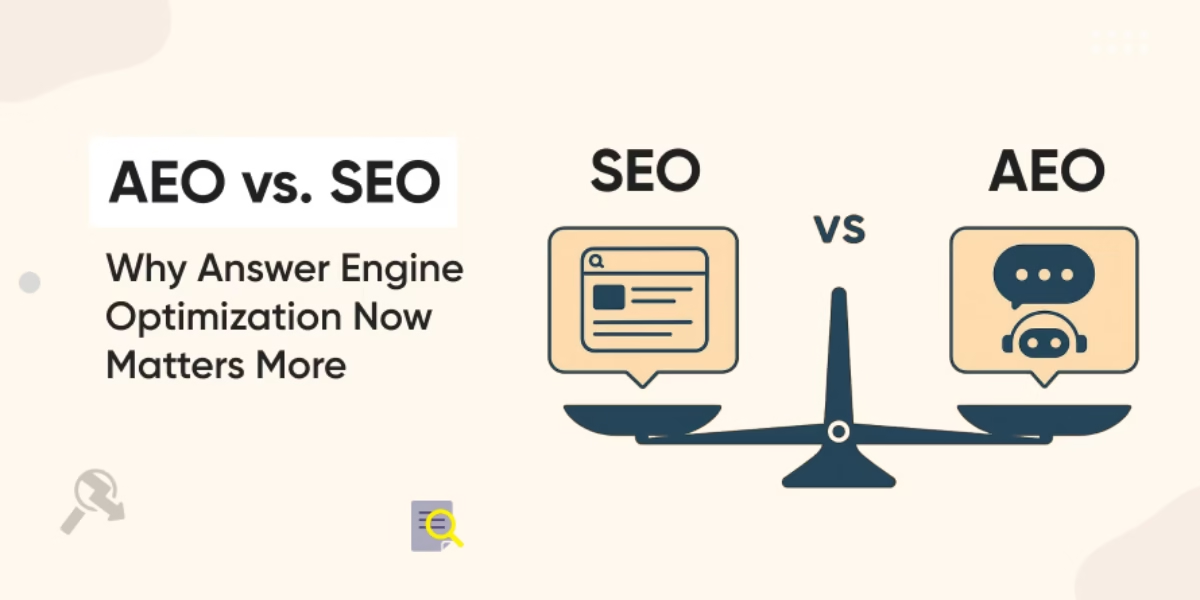
Most of the businesses are still using SEO for ranking in top SERPs for specific keywords, and the SEO has now evolved, but still they have not adopted it yet. Now SEO is upgraded to ranking in SERPs plus AI Overviews, LLM models, or Answer Engines.

The majority of businesses will eventually focus on answer or generative engine optimization instead of optimizing for particular keywords on Google. The ranking system and the traditional techniques are not worthy to get ranking in the advanced search results like answer engines, LLM model recommendations, etc.
Foundation of Modern SEO
Modern SEO advertising is built on four main principles that help you get ranked in search engines, bring in relevant users, and have good interactions with those users.
Now we have to create a professional human content copy following Google E-E-A-T and NLP techniques to come up with professional and the content that must include your experience that you have gained wile working in that particular field.
This is the modern SEO that we are currently using to rank businesses in top searches (SERPs), AI overviews, and LLM models like ChatGPT, Perplexity, Gemini, etc.
Technical SEO
Technical SEO (Building a Robust Structure) is based on analysing your website’s structure to ensure search engines can reliably load, crawl, and process your content. Not managing these important components can greatly reduce your site’s loading time, no matter the content’s reliability.
Craw-lability and Indexability
Optimizing your website visibility for search engines requires algorithmic programs called crawlers or bots (e.g., Googlebot, Bing bot) to recognize web links. Once visited, content is monitored and organized in a broad ranking. A major challenge for businesses is when relevant websites are not visible or readable, meaning they won’t load in search results, effectively driving them invisible.
Our solution offers complete SEO analyses using tools like Google Search Console to highlight and remove crawl problems and indexed errors, ensuring all profitable content is readily available.
Site Speed and Mobile Optimization
Optimizing the user experience page execution speed is an important visibility variable for search engines, as poorly designed sites significantly reduce user experience (UX) and give rise to higher conversion rates. By using adaptive indexing, Google generally analyses the mobile layout of a website for search engine ranking.
A basic problem is poor mobile operation, resulting in lowered recognition. We execute this by utilizing modern web development, image optimization, and reduced amounts of data, ensuring your site is quick and reliable on all platforms.
Structured Data
Managing search engine structured data (such as applying Schema.org phrases) is an algorithm that communicates detailed data relative to your content to search engines. This will help them recognize context more rapidly. The problem is that without this, your text may not effectively maximize its ranking in search results.
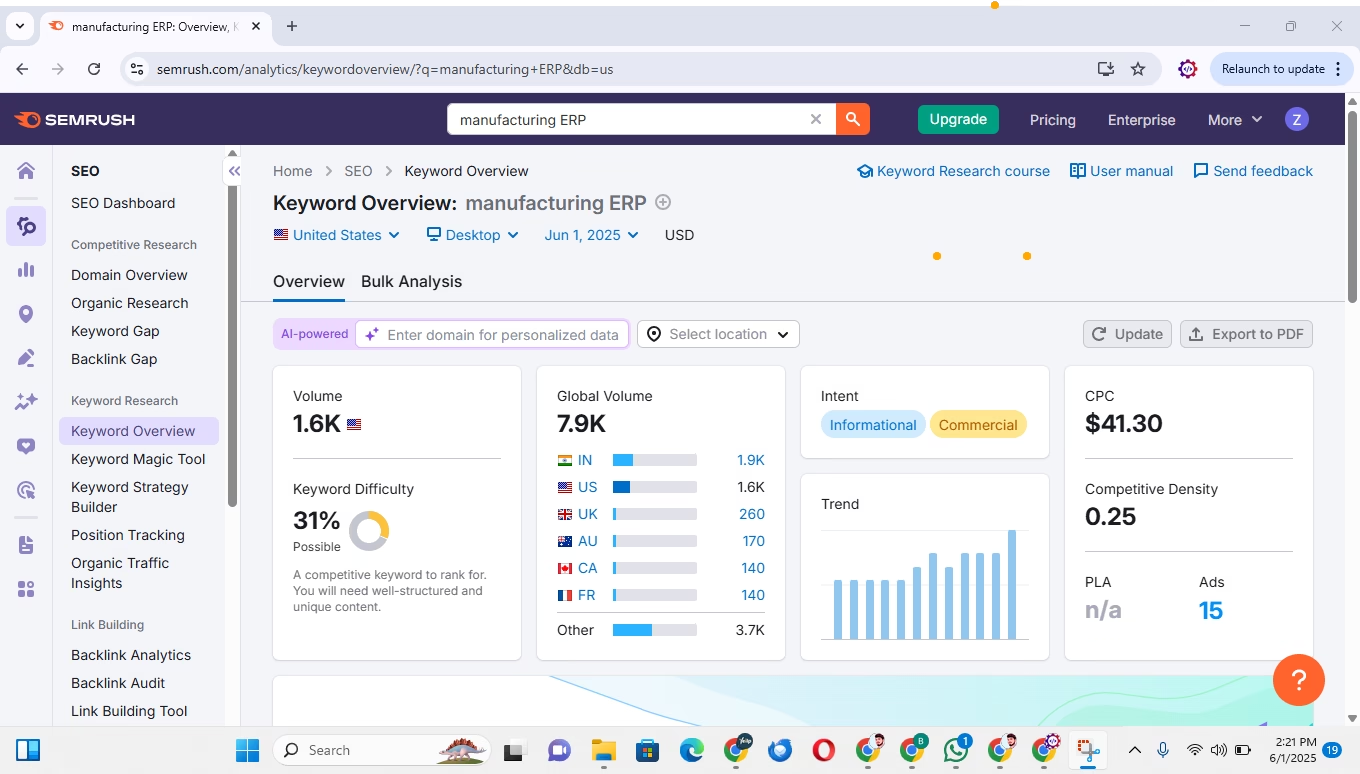
Our approaches are not built on inductive thinking but on measurable data. A major drawback is establishing SEO plans without detailed statistics, leading to lost resources. We get started by analysing key performance indicators (KPIs) such as website visits, keyword indexing, backlink improvements, and conversion rates. We apply tools like Google Analytics, Google Search Console, and Semrush for rankings and operation analysis, allowing for consistent growth and tangible results.
On-Page SEO
On-page SEO (crafting compelling content) involves structuring personal web pages to increase their search engine visibility and user engagement. It’s related to more than just keywords, it’s the process of delivering details professionally.
Keyword Strategy and Search Intent
Identifying your audience, innovative SEO analyses search intent, the basic concept that motivates a user’s search queries. The problem develops when content manages to align with this target audience, leading to high bounce rates.
Our solution builds on detailed keyword analyses to monitor specialized keywords and user intention. This advances deeper than keyword quality to ensure content effectively responds to the user’s objectives, whether it’s technical guidance, or a sale. We also use techniques to recognize relevant categories.
Content Quality and Readability
Connecting with your readers and offering quality content is insightful, attractive, and delivers authentic value to users. A standard disadvantage is content that is cluttered or tough to read, leading to users rapidly going off the page. We ensure content is thoroughly understood by “separating” it into short writings (3-4 lines), utilizing simple headings (H1, H2, H3), and integrating digital media like graphic images and bar graphs to optimize readability and interaction, keeping users on the page longer.
E-E-A-T and Quality
Building trust and authenticity, Google’s E-E-A-T structure is a valuable authenticity framework, specially for “Your Money or Your Life” (YM YL) content. The major issue is content missing authentic references, altering reliability, and search engine rankings. We focus on human-written content that delivers direct feedback and is ultimately published or reviewed by domain field experts. This ensures authenticity and reliability, avoiding software-generated content and light content.
A complete competitive examination for analysing your competition is important. We perform an advanced SERP analysis to determine the ranking issues at play for your target keywords, finding your competitors’ top searches, backlink URLs, and organic conversion rates. This data enables us to recognize failures and possibilities to compete with other companies.
Off-Page SEO
Off-page SEO involves procedures related to your website that negatively affect its search engine performance. It’s about establishing popularity and authority on the web.
Link Building and Ranking Results
Getting credible backlinks (or internal links) from trustworthy external sites is important for advertising your site’s reputation and reliability to search engines, significantly changing your page ranking. A drawback is a defective link page or the display of artificially generated links from poor-quality websites.
Our approaches focus on authentic link building, such as establishing external assets (content intended to produce links) and visitor blog comments on valuable domains. This involves establishing blog links by executing authentic advertising, avoiding traditional SEO strategies like link policies or purchased links.
Brand Mentions and Social Responses
Growing your reach using natural links, mentions of your brand on different websites, often used as references, and communication on social media relate to your broad brand recognition. The problem is ensuring a uniform brand identity all across the digital market.
We position ourselves for this by optimizing Open Graph meta tags for better social communication and increasing positive feedback through strong audience interaction, indirectly leading to backlink development and advertising.
Local SEO and Business Rankings
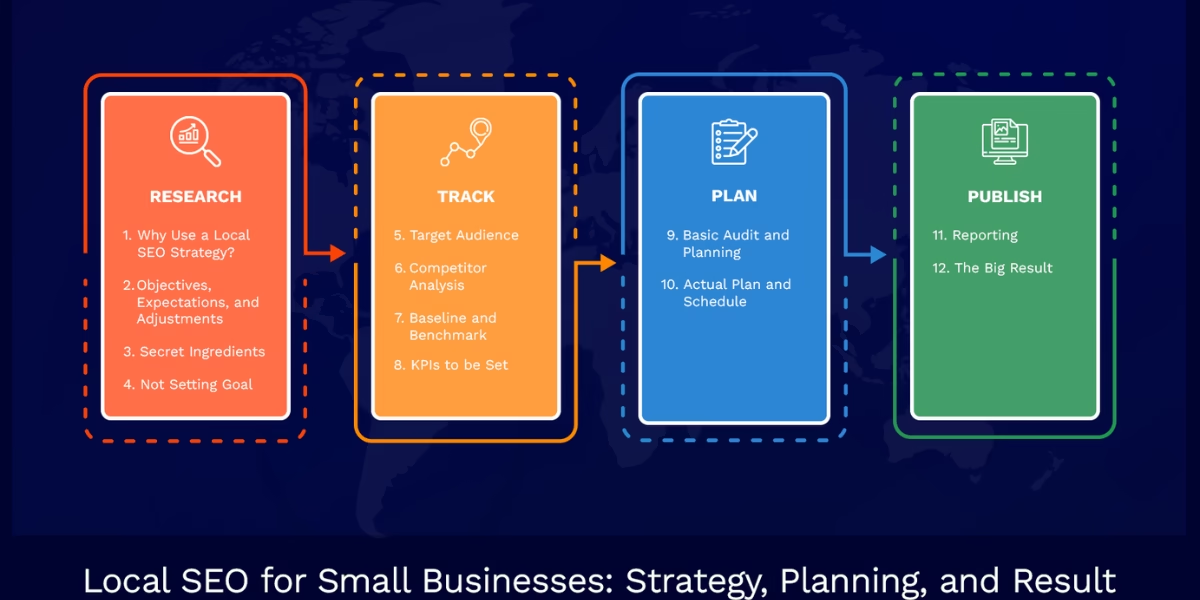
For businesses targeting a specialized advertiser marketplace, local SEO is most important. The major problem is not ranking significantly in local search advertisements or local packs (maps and business page listings).
Our approaches involve maximizing success for local terms dealing with standardized NAP (Name, Address, Phone Number) content for all online platforms. Implement the local business schema metadata to improve its relevancy in local search results and draw related customers. We believe in a strategic, data-driven approach to SEO. Our procedures are developed to examine your personalized business objectives and competitive context, offering targeted tactics alternately to broader strategies.
What are the major features or principles of modern SEO?
Modern SEO depends on four major principals. This includes technical foundations, content quality, user experience (UX), and authority signals. Technical foundations relate to how efficiently search engines can load, crawl, and organize your content. Content quality involves the significance and connection of your offerings to users. User Experience (UX) includes how clients communicate with your website. Authority signals are outward evidence of your content’s quality.
How do search engines work (crawling, indexing, ranking)?
Search engines leverage a different technique to present exciting outcomes. This includes crawling, indexing, and ranking. This is the technique by which search engine spiders analyse the online environment to identify and draw insights from web pages. After a crawl, the valuable data derived from web pages is processed and structured into a complex information store called the site index.
What is search intent, and why is it valuable?
Search intent relates to the original objectives or motive that inspired a user’s search inquiry. Recognition of user objectives is important for designing practical content and optimizing for search engines, as it helps link data with what users are effectively researching. There are generally four types of search intents are informational intent, navigational intent, technical and research inquiry, and purchasing intent.