
In the increasingly competitive context of digital marketing, search engine optimization (SEO) stands out as a basic strategy for building online revenue. For business experts, the ultimate goal is very simple, to draw low-cost, return visitor traffic to your business website from search engine results. Throughout the extended range of SEO, on-site SEO, also known as on-page SEO, is the strategy of optimizing content personally on your website’s pages to boost its traffic and position it on search engine results pages (SERPs).
The standard turn in modern SEO is towards “human-focused content,” ranking informative content that effectively aligns with user objectives. Google, while a highly advanced algorithm, still depends on personalized feedback to measure content quality. Our approach avoids harmful strategies like keyword optimization, focusing primarily on human-driven, professional content that answers the unique concerns and needs of your target audience.
Designing Innovative and Relevant Content
Content is usually described as the most important thing when it links to your website, as it improves popularity and communication. Advanced on-site SEO requires that content be personal, valuable, and optimized for search intent.
Understanding Search Intent
Pain Point: Many businesses have issues with content that is unable to capture interest, leading to higher termination rates and lost sales, principally due to a shortage of recognition of what users are truly going for. Conventional or “thin” content, which generally addresses the leading edge of a problem, takes down user feedback and can significantly damage search rankings.
Solution: Our technique starts with an advanced overview of search intent through inquiries (research-related, guidance, transactional, comparative) to ensure your content conveys the specific level of understanding users are expecting. We provide innovative content that extends deeper than recycling older content, supplying original concepts, detailed overviews, and effective feedback. This includes complete auditing, utilizing research and statistical data to clearly focus on the particular concerns of your business expert audience.
Executing Google E-E-A-T and NLP
Pain Point: Content that lacks visible authenticity or expected reliability usually becomes difficult to rank for competitive search queries, as Google prioritizes experienced and authoritative websites.
Solution: We align the content with Google’s E-E-A-T guidelines, ensuring it is thoroughly written and directed to reliable researchers or experts. Additionally, we optimize for Natural Language Processing (NLP), writing content that Google’s machine learning methods can directly recognize by answering main search inquiries and adding the appropriate phrases, thereby improving the page’s relevancy and increasing attractive headline opportunities for ranking.

Expert Keyword Optimization and Content Updates
Pain Point: Over-optimization that involves keyword spamming, or alternately, a failure of effective keyword positioning, can lower rankings and ultimately lead to visually appealing content. Written content frequently becomes irrelevant in progressively improving marketplaces.
Solution: Our technique focuses on proactively organizing target keywords within essential on-page elements: the H1, the first 100–150 words of the general content, and subheadings (H2s, H3s). We also leverage Latent Semantic Indexing (LSI) keywords and associated synonyms to provide enhanced context without maximizing efficiency.
Optimizing the On-Page Content
Effective SEO makes sure your website is accessible, indexable, and operating successfully from a technical viewpoint. These technical optimizations are essential for a positive user interface and increased rankings.
Increased Page Speed and Mobile Usability
Pain Point: Slow upload times (over 3 seconds) drastically increase failure ratios and significantly alter user interactions, with 53% of users turning off pages that navigate too slowly. A non-responsive web design eliminates a valuable category of mobile users, which accounts for 55% of online search traffic.
Solution: We optimize page execution speed by optimizing imagery file sizes. We ensure mobile usability by implementing an adaptive strategy, which converts your website’s design to any smartphone display format. This eliminates issues like images skipping off the page or overcrowded designs.
Optimizing URL Structures and Adapting Schema Markup
Pain Point: Deep, unoptimized URLs divert both search engines and users, preventing recognition of page content and lowering visibility. Unapproved schema markup ultimately leads to a low range of content samples, altering click-through rates.
Solution: We deliver organically optimized URLs that are clear, descriptive, and involve target keywords, executing them easily for both users and search engines to recognize. We integrate schema markup (organized data) to let search engines effectively recognize page content and eventually develop rich snippets (e.g., star rankings, event dates) in SERPs, which can significantly grow access rates.
Effective Meta Tags for Enhanced Visibility
Meta description headings, while not clearly recognized on the page, are valuable HTML features that provide search engines with significant insight about your content and negatively impact user behaviour.
Develop Effective Meta Tags
Pain Point: Unclear or poorly optimized title tags can contribute to low lead generation rates from search results, even if the content ranks successfully.
Solution: We craft title subsections to be appealing and brief (around 50–60 characters to avoid cut-offs) and use the leading target keyword, ideally closer to the opening. Personalized titles for each page are highly essential to minimize duplicate data and accurately convey the page’s objectives to search engines. This logical design ensures users directly recognize the application of your content to their inquiry, altering the probability of a click.
Optimizing Internal & External Linking
Links form the basic structure of the web, and their effective execution on your site is important for SEO.
Building Website Authority
Pain Point: Disconnected content or “lost pages” that contain no internal links can delay search engine queries and minimize the reliability of a website, making it more challenging for pages to rank.
Solution: We thoughtfully introduce internal links that lead to other useful pages within your website. This lets search engines recognize and identify your site’s layout, pointing out the benefits of linked pages. We apply rich keyword link text (with different variations to minimize over-optimization) to pass over “page rank” and quality to top-ranked pages, thereby increasing their advertiser rankings.
Optimizing Visual Content (Images & Video)
Visual variables help improve user involvement and can help contribute significantly to SEO when thoroughly optimized.
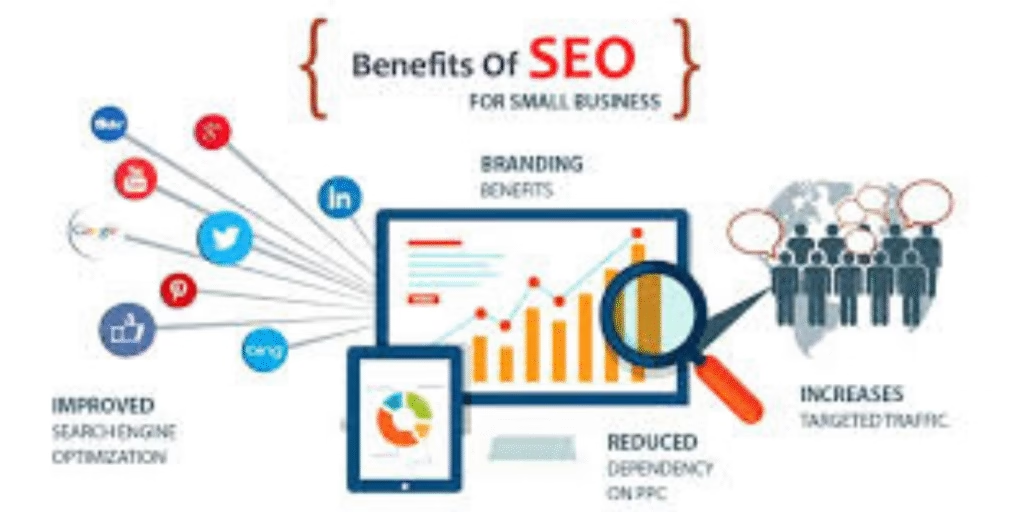
Improve User Experience and Search Visibility
Pain Point: Unoptimized, heavy image content may significantly slow down page load times, affecting user interactions and website rankings. The shortage of reliable image file metadata means ignoring prospective possibilities for image search rankings and delivering data to search engines.
Solution: We ensure all visuals are optimized for file size (e.g., changing to Web P format) to offer quick page load times without reducing their quality. Every image is offered a recognizable URL and alternative (alt) text that efficiently explains its content, often utilizing related keywords to help search engines and visually impaired users.
For business professionals, a broad strategy with respect to digital SEO is not sufficient. We execute a personalized, human-written, professional, and research-based advertising plan that assesses every component of your digital advertising strategy. For business professionals, a broad strategy with respect to digital SEO is not sufficient. We execute a personalized, human-written, professional, and research-based advertising plan that assesses every component of your digital advertising strategy.
What is on-page SEO, and how does it link to organic digital advertising?
On-page SEO is the strategy of utilizing content effectively on a webpage to optimize its popularity and ranking on search engine results pages (SERPs) for both search engines and consumers. It will involve altering some components on your website, so search engines can efficiently analyse and display your content. This involves optimizing the content that exists, and the HTML structure utilized on a page.
What are the basic principles and techniques for effective on-page SEO?
Beneficial on-page SEO involves a broad array of strategies that focus on content, HTML details, user behaviour, and other technical components. Keyword optimizing is a damaging, outdated activity, you should simply insert your target keyword in major positions like the page’s URL, heading, H1 description, and around the first 100–150 words of the content. This lets Google effectively recognize your page’s topic.
What are the key principles and strategies for reliable on-page SEO?
Google is powerful in order to analyse alternatives and deeply connected words. Adding Latent Semantic Indexing (LSI) keywords (that are closely connected to your founding keyword) gives deeper insights and increases content awareness. Focusing on long-tail keywords (broader, more personalized phrases) can be more competitive and deliver special traffic. Content is a major factor. It must be authentic, invaluable, and visible.